
Why 2026 Is the Year of Headless: CMS, Commerce & Backends
The digital world has officially entered the Headless Era, and 2026 marks a turning point for how businesses build, scale, and deliver online experiences. Brands across every sector – eCommerce, SaaS, enterprise tech, media, retail, and even traditional industries are shifting away from old, monolithic systems and embracing headless CMS, headless commerce, and headless backends. The driving force behind this massive transformation is simple: the need for speed, flexibility, personalization, and future-proof architecture has never been more critical.
1. Omnichannel Is No Longer Optional, It’s Mandatory
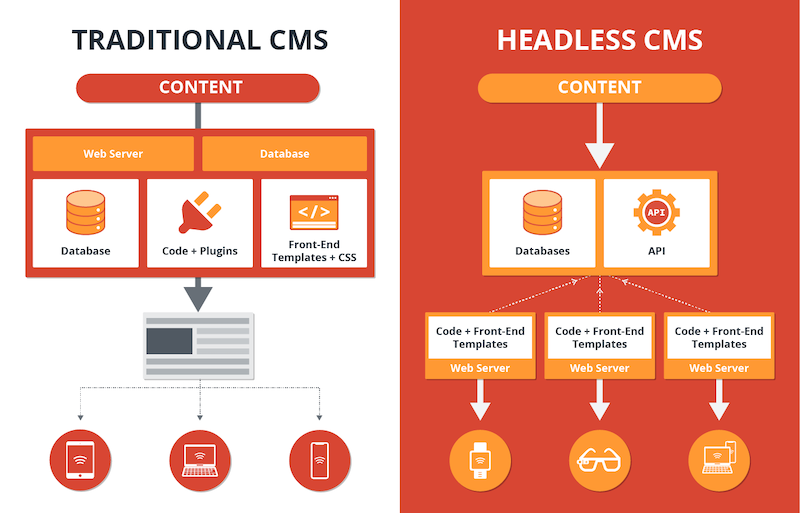
One of the biggest reasons headless architecture dominates 2026 is the explosive rise of omnichannel experiences. Today’s users don’t just interact through websites and mobile apps; they engage through wearables, smart devices, AR/VR, digital kiosks, smart TVs, voice assistants, and more. Traditional CMS platforms struggle to keep up because they tightly couple content with the front-end. A headless CMS separates the content layer from the presentation layer, making it possible to deliver the same structured content to any platform through APIs. This allows brands to maintain consistency while pushing content anywhere, anytime, something that has become essential, not optional, for modern businesses.
2. Headless Commerce Enables Hyper-Fast, High-Converting Stores
Headless commerce has also seen a massive global rise, especially because online shoppers now expect lightning-fast, app-like experiences. In 2026, users demand instant load times, seamless checkout flows, flexible payment options, and personalized recommendations at every touchpoint. Headless commerce enables businesses to build custom storefronts using modern frameworks like Next.js, React, and Vue while relying on powerful backend commerce engines. Because everything communicates through APIs, brands can design unique purchase experiences, experiment rapidly, and integrate new tools without breaking their core system. This agility is transforming how retailers and D2C brands approach online selling.
3. Developer Freedom and Faster Build Cycles
Another major factor behind the headless revolution is developer freedom. In monolithic systems, templates, plugins, themes, and outdated structures restrict developers. Headless architecture removes those limitations entirely. Front-end and back-end teams can work independently, shipping updates faster and experimenting without risk. Businesses benefit from shorter development cycles, smoother DevOps processes, and fewer bottlenecks. In 2026, the best engineering teams prefer headless systems because they offer complete flexibility, modern tooling, and a clean separation of concerns.
4. Headless Backends Are Perfect for AI Integration
The rise of AI in 2026 has accelerated headless adoption even further. Today’s digital products rely on AI-driven personalization, automated content creation, intelligent search, conversational support, and real-time analytics. Traditional systems are not built to integrate AI at this scale. Headless backends, however, are designed for API-first connectivity, making it easy to plug in AI engines, ML models, automation platforms, and custom data pipelines. As a result, businesses adopting headless architecture gain the ability to create smarter, more personalized, more predictive experiences that adapt to user behavior instantly.
5. Performance Is King And Headless Wins
Performance is another area where headless technology outshines traditional systems. With pre-rendering, CDN distribution, caching layers, serverless functions, and edge delivery, headless architecture dramatically improves speed and SEO performance. Faster websites consistently translate into higher search rankings, stronger engagement, and better conversion rates, making performance a business-critical priority. Companies that depend on digital presence for revenue simply cannot afford slow websites or outdated tech stacks anymore.
6. Extreme Scalability for Enterprise and High-Growth Brands
Scalability is also a core reason why 2026 is the year of headless everything. Instead of relying on one large system, headless websites break functionality into smaller components: a content system, a commerce engine, a search system, a front-end layer, and APIs connecting everything. This modular approach allows businesses to scale each part independently based on need. High-traffic events, global expansion, and rapid product launches become easier to manage because headless architecture is built to grow without downtime, disruptions, or performance dips.
7. Lower Long-Term Costs and Better ROI
Cost efficiency has also played a surprising role in headless adoption. While many businesses assume headless systems are expensive, 2026 has shown that they actually reduce long-term costs by eliminating plugin maintenance, theme limitations, costly rebuilds, and performance penalties. Instead of replacing the entire system every few years, companies can upgrade or replace specific components. This future-proof approach extends the lifecycle of digital platforms and ensures that businesses never fall behind in technology again.
8. Security Is Stronger in Headless Ecosystems
Security has become one of the strongest arguments for going headless. Traditional CMS platforms are exposed on the front-end, making them easy targets for attacks. In a headless setup, the CMS or commerce engine is never directly exposed to the public. APIs control access, infrastructure can be isolated, and enterprise-level security models can be applied across every component. This architecture aligns perfectly with modern zero-trust standards, making headless a preferred choice for enterprises and regulated industries.
2026 = The Year Headless Becomes the Default
Taken together, these advances make it clear why 2026 is the year headless becomes the global default. Businesses want freedom. Developers want flexibility. Users want speed and personalization. Brands want systems that scale effortlessly and integrate with the fast-growing ecosystem of AI, automation, and cloud-native technologies. Headless architecture delivers on all of these needs and more.
The future of digital experiences is unmistakably API-first, modular, fast, secure, AI-ready, and headless. And in 2026, companies that embrace this shift will move faster, innovate more effectively, and stay far ahead of competitors still trapped in outdated monolithic systems.