
Top 10 Things That Make a Website “Enterprise-Ready” in 2026
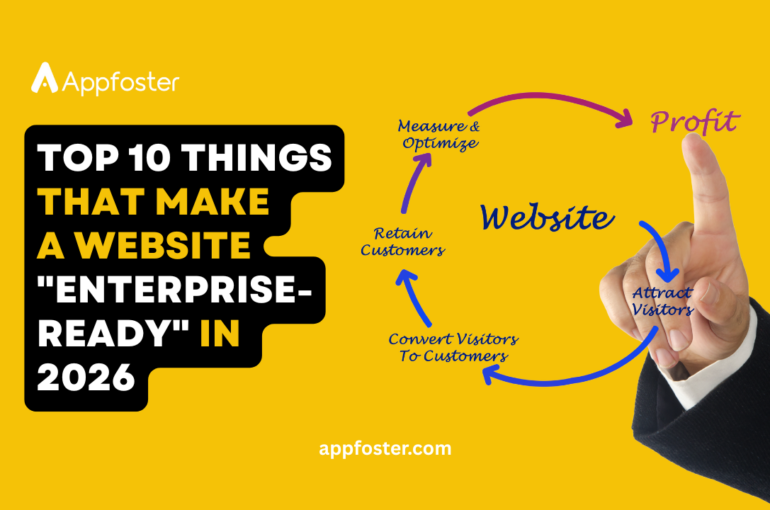
In 2026, an enterprise website is no longer just an online presence, it is a core business engine. Companies now expect their websites to deliver speed, security, automation, integration, and intelligence at every level. As customer expectations become more demanding and digital ecosystems become more complex, an enterprise-ready website must be capable of handling large-scale traffic, managing critical business processes, and delivering personalized, AI-driven user experiences. Below are the ten foundational elements that define what a truly enterprise-grade website looks like in 2026.
1. Modern, Scalable Architecture Built for Growth
An enterprise-ready website in 2026 must be built on a strong, modern architecture that allows seamless scalability. Technologies like headless CMS, API-first development, microservices, and cloud-native deployments have become the default standard for large businesses. These systems allow enterprises to decouple their front-end and back-end, making updates faster, improving flexibility, and enabling content to be delivered across multiple platforms, from websites and mobile apps to digital kiosks and smart devices. This architectural approach ensures that as a company grows, the website can scale effortlessly without performance issues or structural limitations. For businesses aiming to expand globally or support multi-brand ecosystems, this architecture is essential.
2. AI-Powered User Experiences and Automation

Artificial Intelligence has moved from being an optional add-on to becoming the backbone of enterprise websites. In 2026, AI enables features that dramatically improve engagement, conversions, and operational efficiency. Enterprise websites now rely on AI-driven personalization, where content dynamically adapts to each visitor based on behavior, preferences, and previous interactions. AI-powered chatbots and virtual agents also deliver instant support, automate routine queries, and reduce the load on customer service teams. Internal site search has transformed from basic keyword matching to intelligent semantic search capable of understanding real intent. Automation powered by AI also helps enterprises streamline workflows from content creation and testing to analytics and reporting, making digital teams significantly more productive.
3. Enterprise-Grade Security and Global Compliance
Security is no longer negotiable for enterprises. With rising cyber threats, stricter global data laws, and more sophisticated attacks, enterprise websites must adopt advanced security frameworks. This includes end-to-end encryption, zero-trust architecture, secure APIs, and multi-factor authentication for admin access. Regular penetration testing and vulnerability assessments are now standard practice. Compliance has also become a major priority, especially for companies operating in multiple regions. Websites must align with regulations like GDPR, SOC 2, ISO 27001, and industry-specific requirements such as HIPAA for healthcare. An enterprise-ready website in 2026 not only protects company data but also ensures consumer privacy and builds long-term trust.
4. High-Speed Performance and Optimized Core Web Vitals
Enterprise websites handle heavy content, large integrations, and massive traffic. Therefore, high performance is a critical expectation. Websites in 2026 must load in under two seconds, maintain a 95+ Lighthouse score, and meet Google’s updated Core Web Vitals standards for speed, responsiveness, and visual stability. Achieving these benchmarks requires a combination of advanced caching, CDN and edge delivery, code splitting, lazy loading, and next-gen image optimization. For enterprises, faster sites directly result in better conversions, improved search visibility, and enhanced user satisfaction. A slow or unoptimized website can cost large companies millions in lost opportunities, making performance a top strategic priority.
5. Seamless Integration with Business Systems and Tools
Enterprises depend on complex digital ecosystems that include CRMs, ERPs, HRMS platforms, analytics tools, marketing automation systems, and more. An enterprise-ready website in 2026 must integrate smoothly with all these systems through secure APIs. This ensures data flows consistently across teams, sales receives leads instantly, marketing triggers automated workflows, operations get real-time updates, and leadership teams access unified dashboards. Whether it’s syncing with Salesforce, HubSpot, SAP, Zoho, or custom in-house software, the website must function as the centralized digital hub. Without strong integration capabilities, enterprises experience data silos, inefficiencies, and operational delays.
6. Advanced User Permissions and Role-Based Access
As enterprises scale, more departments and teams interact with the website, content writers, marketers, developers, admins, regional managers, and external partners. Therefore, robust role-based access control (RBAC) becomes essential. Enterprise-ready websites offer multi-layered permission settings where each user can only access the tools, content, and functions relevant to their role. This prevents unauthorized access, reduces security risks, simplifies workflows, and maintains content integrity. For multi-regional companies or large internal teams, RBAC is a critical feature that ensures smooth internal operations.
7. High Availability, Uptime Guarantees, and Disaster Recovery
Downtime is extremely expensive for enterprises. An hour of outage can lead to significant financial losses, damaged customer trust, and operational disruptions. In 2026, enterprise-grade websites must deliver 99.9%+ uptime, supported by redundant infrastructure, load balancing, and real-time health monitoring. Advanced failover systems instantly redirect traffic during failures, while disaster recovery setups ensure that the website can be restored quickly in case of a major issue. Cloud platforms like AWS, Google Cloud, and Azure enable these capabilities, ensuring business continuity regardless of traffic spikes, hardware failures, or cyber threats.
8. Strong Content Management and Multi-Language Capabilities
Content is the backbone of enterprise communication, and managing it at scale requires a powerful CMS. Enterprise websites in 2026 must support multi-language experiences, multi-site management, workflow approvals, content versioning, and editorial access control. Whether a company operates in 5 regions or 50, the CMS must allow local teams to manage region-specific content without affecting other branches. AI assistance also helps with content translation, SEO optimization, and automated publishing. This level of control ensures consistency while enabling rapid content updates across global teams.
9. Future-Ready UX and Conversion-Optimized Design
User experience has evolved significantly by 2026. Enterprise websites now focus on adaptive design, where layouts adjust not only based on device but also on user behavior and context. Accessibility is another crucial aspect, WCAG 2.2 compliance ensures the website is usable for all individuals, including those with disabilities. Enterprises also prioritize conversion-focused design, using clear navigation, consistent design systems, micro-interactions, and intuitive layouts. Personalization powered by AI further enhances engagement by presenting the right content, offers, or products at the right moment. A well-designed enterprise website doesn’t just look good, it actively supports business goals.
10. Data-Driven Insights, Dashboards, and Analytics Automation
Enterprise websites generate enormous amounts of data, and in 2026, businesses depend on that data to make real-time decisions. Beyond traditional analytics tools, enterprise-ready websites now include AI-enhanced dashboards that highlight trends, predict user behavior, and offer optimization recommendations. Heatmaps, user journey tracking, funnel reports, and event-based insights help companies understand what users are doing and why. Automated reporting saves teams hours of manual work. When combined, these capabilities give enterprises a clear view of performance and help leadership teams make smarter, faster decisions.
Conclusion: What Truly Makes a Website Enterprise-Ready in 2026
An enterprise-ready website is one that is fast, secure, intelligent, scalable, and deeply integrated with business operations. It leverages modern architecture, AI capabilities, strong security, seamless integrations, enterprise-level content management, and data-driven insights to deliver consistent performance at scale. As digital expectations continue to rise, these ten pillars form the foundation that allows businesses to operate globally, innovate rapidly, and deliver exceptional experiences to customers, employees, and partners.